
Call us, we are at your service
Call us, we are at your service
How much does it cost for Kanchenjunga trek? The Kanchenjunga Circuit trek cost typically ranges from $1,800 to $2,600 USD per person for a standard 20 to 22-day itinerary. As one of Nepal's most remote trekking destinations, the price is heavily influenced by its status as a restricted area, requiring a special permit and a mandatory licensed guide for a minimum of two trekkers. This all-inclusive package generally covers the Kanchenjunga Restricted Area Permit (RAP) and the Kanchenjunga Conservation Area Project (KCAP) permit, which are essential for navigating the eastern Himalayan border regions. The cost further includes the services of a government-licensed guide and local porters (typically one porter for every two trekkers), covering their daily wages, insurance, equipment, and meals. Throughout the journey, the package provides full-board meals (breakfast, lunch, and dinner) and twin-sharing accommodation in traditional teahouses, which become increasingly basic and atmospheric as you reach higher altitudes. Additionally, the price includes round-trip domestic flights between Kathmandu and Bhadrapur, followed by private or shared jeep transportation to the trailheads at Taplejung or Sekathum/Ranipul.
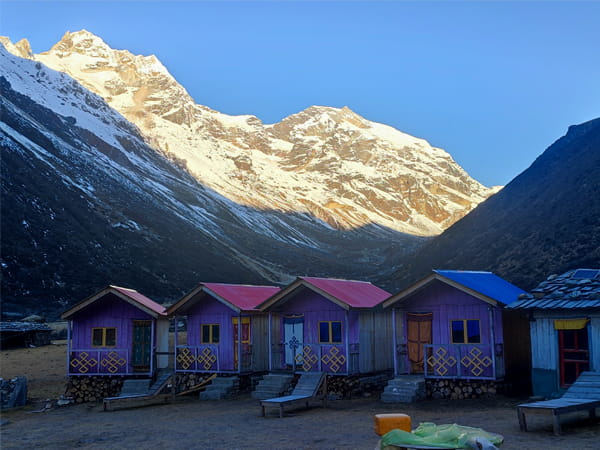
The Kanchenjunga Circuit Trek is classified as moderate to strenuous. It is one of the longest and most remote treks in Nepal, requiring trekkers to navigate rugged glacial moraines and high-altitude passes. Unlike more commercial routes, this trek involves sustained periods in complete wilderness and requires exceptional physical stamina and mental resilience to complete the full circuit safely.
The Kanchenjunga Circuit Trek package includes teahouse and basic lodge accommodation, domestic flights between Kathmandu and Bhadrapur, local ground transfers, licensed guides, porters, and all necessary restricted area permits (KCAP and RAP). It also covers all meals and snacks during the trek.
The Kanchenjunga trek route typically begins with a flight to Bhadrapur followed by a drive to Taplejung or Tapethok (1,585m). The trail follows the Tamur River upstream, passing through Chirwa, Sekathum, and the Tibetan village of Ghunsa (3,595m). The journey reaches the North Base Camp (Pangpema, 5,143m) before crossing the high passes of Sele La (4,290m) and Sinion La to reach the South Base Camp (Oktang/Ramche, 4,730m).
The best time for the Kanchenjunga Circuit trek is Autumn (October–November) and Spring (March–May). Due to its eastern location, the region receives higher rainfall; therefore, the post-monsoon window in Autumn offers the crispest skies and most stable weather. Spring is famous for the blooming of rare rhododendron species and vibrant alpine flora against the backdrop of the world's third-highest peak.
The maximum elevation of the Kanchenjunga Circuit trek is reached at Pangpema (North Base Camp) at 5,143m (16,873 ft). The trek offers unparalleled views of Mount Kanchenjunga (8,586m)—the third-highest mountain in the world—along with Mount Jannu (7,710m), Kabru (7,412m), Kambachen (7,802m), and several peaks bordering Sikkim and Tibet.
Strategic acclimatization stops in Ghunsa, Lhonak and Ramche serve as the perfect bases for exploring hidden glacial valleys. Depending on your fitness level, you can choose from these excursions:
For those seeking the ultimate Himalayan traverse, the Kanchenjunga trek can be connected to the Lumba Sumba Pass. This extension links the Kanchenjunga region to the Makalu Barun National Park, creating a long-distance adventure through some of the most isolated valleys in eastern Nepal.
The Kanchenjunga Circuit Trek covers a total walking distance of approximately 200–220 kilometers (124–136 miles). It is a demanding journey traditionally completed in 20–25 days. The route is significantly more isolated than the Manaslu trek, involving 7–9 hours of daily walking across river valleys, steep mountain ridges, and glacial scree slopes.
The Kanchenjunga Circuit Trek typically costs between $1,800–$2,500 USD per person. The higher price reflects the domestic flights, the long duration, and the complex logistics of operating in a remote restricted area. The cost covers all permits, professional staff, transportation, and meals. A minimum of two trekkers is required for the restricted area permit.
Our Kanchenjunga Circuit Trek itinerary focuses on a safe ascent and comprehensive coverage of both base camps. It includes multiple acclimatization days in Ghunsa and Kambachen to ensure your body is ready for the North Base Camp and the challenging Sele La pass crossing. This itinerary provides deep immersion into the culture of the Limbu and Sherpa communities.
The Kanchenjunga Circuit trek map outlines a vast horseshoe-shaped route through the Kanchenjunga Conservation Area. A reliable map is essential for understanding the transition from the tropical Limbu villages to the high-alpine Tibetan landscapes. It highlights the convergence of the Yalung and Kanchenjunga glaciers and the critical pass crossings that connect the North and South sides of the massif.
The Kanchenjunga Circuit Trek offers a rare glimpse into a "forgotten" corner of the Himalayas. Key highlights include visiting both the North and South Base Camps, seeing the iconic Mount Jannu, and experiencing the pristine wilderness of the Kanchenjunga Conservation Area. Trekkers encounter diverse wildlife, such as the red panda and blue sheep, while wandering through the most extensive rhododendron forests in Nepal.
All guides who work with Above & Beyond Trekking are professional, government-licensed experts with specialized knowledge of Eastern Nepal. Due to the extreme remoteness and restricted status, a licensed guide is legally mandatory. Our guides are experienced in wilderness first aid and high-altitude logistics, ensuring your safety in an area where teahouse facilities are basic and communication is limited.
The Kanchenjunga Circuit Trek typically starts with a domestic flight to Bhadrapur, followed by a scenic drive through the famous tea gardens of Ilam to Taplejung. This starting point allows for a gradual ascent through the lower hills, providing trekkers with essential time to build their walking legs before entering the high-altitude zones of the upper Tamur valley.
Acclimatization is paramount on the Kanchenjunga trek due to its length and the heights reached at Pangpema. Our itinerary features double acclimatization stops in Ghunsa and Kambachen. By strictly following the rules of "climb high, sleep low," we ensure your body is fully prepared for the 5,000m+ base camps and the demanding Sele La pass.
The standard Kanchenjunga Circuit Trek duration is between 20 to 25 days. This duration is necessary to cover the immense distance safely and to allow for the domestic travel required to reach the far eastern border. We do not recommend rushing this trek; the long duration is what makes the experience so rewarding and culturally immersive.
Packing correctly for the Kanchenjunga Circuit Trek is essential, as temperatures shift from the tropical heat of the lowlands to the freezing glacial air of the North and South Base Camps. The key to staying comfortable during this long expedition is a versatile layering system. Your gear should prioritize moisture-wicking fabrics, a high-quality down jacket for sub-zero high-altitude nights, and sturdy, well-broken-in trekking boots to handle the remote, rugged forest trails and challenging glacial moraines.
