
Call us, we are at your service
Call us, we are at your service
How much does it cost for Langtang Valley Trek? The Langtang Valley trek cost in 2026/2027 typically ranges from $700 to $1,200 USD per person for a standard 7–10 day itinerary starting from Kathmandu. This makes it one of the most affordable and rewarding trekking experiences in Nepal, offering stunning Himalayan scenery, rich Tamang culture, and easy access from the capital city.
The total Langtang Trek price depends on several factors such as group size, trekking season, accommodation standard, transportation, and whether the package is budget, standard, or private. Most Langtang Valley trekking packages are designed to be all-inclusive for a hassle-free experience in the Langtang region.
Standard packages generally include round-trip transportation between Kathmandu and Syabrubesi, required trekking permits such as the Langtang National Park Entry Permit, and services of a licensed trekking guide. Many packages also include experienced porters to carry luggage, allowing trekkers to enjoy a more comfortable journey.
During the trek, accommodation is provided in traditional teahouses along the Langtang Valley route, including villages such as Lama Hotel, Langtang Village, and Kyanjin Gompa (3,870m). Trekkers are served full-board meals (breakfast, lunch, and dinner) prepared by local lodges, ensuring proper energy and nutrition throughout the trek.
The Langtang Valley Trek offers excellent value for money compared to other Himalayan treks, providing dramatic mountain views of Langtang Lirung (7,227m), Ganesh Himal, and surrounding peaks, along with rich cultural experiences in Tamang-influenced villages.
Choosing a guided Langtang Valley Trek package ensures better safety, easier navigation, and a smoother trekking experience in this beautiful and less crowded Himalayan region of Nepal.
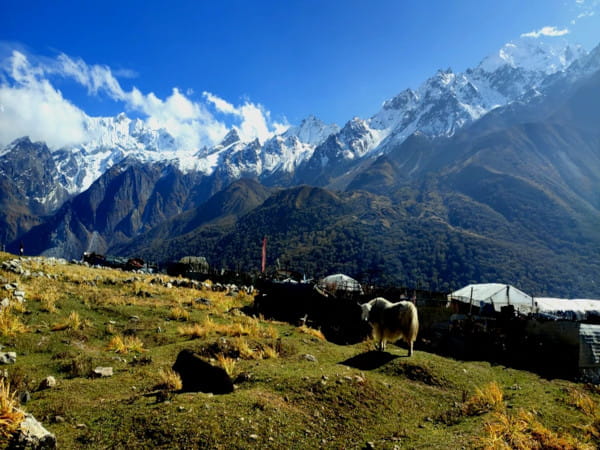
The Langtang Valley Trek difficulty is generally classified as moderate, making it one of the most accessible and rewarding Himalayan treks in Nepal. It is suitable for beginners with good fitness as well as experienced trekkers looking for a shorter alternative to Everest or Annapurna region treks.
Trekkers typically walk 5 to 7 hours per day on well-defined trails that pass through forests, river valleys, suspension bridges, and traditional Tamang villages. While the route does not require technical climbing skills, it includes steady ascents and descents that can be physically demanding over multiple days.
The main challenge of the Langtang Valley Trek is gradual altitude gain. The highest point of the trek is Kyanjin Gompa (3,870m / 12,697ft), and some trekkers may experience mild symptoms of Altitude Sickness (AMS) if they ascend too quickly. Proper pacing, hydration, and acclimatization are important for a safe trekking experience.
Compared to high-altitude treks like Everest Base Camp or Manaslu Circuit, the Langtang trek is shorter and less physically demanding, but still requires basic endurance and stamina. Regular walking, hiking, or cardio training before the trek can significantly improve comfort on the trail.
Seasonal conditions also affect difficulty. The best trekking seasons are spring (March–May) and autumn (September–November), when the weather is stable and mountain views are clear. During monsoon, trails can be slippery, while winter conditions may bring colder temperatures and occasional snowfall at higher elevations.
Overall, the Langtang Valley Trek is a moderate Himalayan adventure that offers a perfect balance of natural beauty, cultural experience, and manageable physical challenge, making it an excellent choice for trekkers seeking a less crowded trekking route in Nepal.
The Langtang Valley Trek Package is a complete Himalayan trekking experience designed for travelers who want a well-organized, safe, and hassle-free adventure in Nepal. This package is ideal for trekkers looking to explore a beautiful and less crowded region close to Kathmandu while enjoying stunning mountain scenery and rich Tamang culture.
Most Langtang Valley trekking packages include essential services such as a licensed professional trekking guide, experienced local porters, and all necessary trekking permits including the Langtang National Park Entry Permit. The package also covers round-trip transportation between Kathmandu and Syabrubesi, the starting point of the trek.
During the trek, accommodation is provided in traditional teahouses along the Langtang Valley route, including villages such as Lama Hotel, Langtang Village, and Kyanjin Gompa (3,870m). Trekkers are served full-board meals (breakfast, lunch, and dinner), prepared by local lodges, ensuring proper nutrition and energy throughout the journey in the Himalayas.
The standard Langtang Valley Trek Package typically ranges from 7 to 10 days depending on the itinerary and walking pace. It offers breathtaking views of Langtang Lirung (7,227m), Ganesh Himal, Dorje Lakpa, and surrounding peaks, along with authentic cultural experiences in traditional Tamang settlements.
Depending on the operator, travelers can choose from budget, standard, or private Langtang Valley Trek packages. Private packages offer more flexibility and personalized services, while budget options focus on essential services at a more affordable cost.
Choosing a guided Langtang Valley Trek Package ensures better safety, easier navigation, and a smoother trekking experience in one of Nepal’s most scenic and accessible Himalayan regions. It is an excellent choice for beginners and experienced trekkers seeking a short yet rewarding adventure.
The Langtang trek route starts at Syabrubesi (1,550m / 5,085 ft) after a 6-7 hours drive from Kathmandu. The trail follows the Langtang Khola upstream, climbing through the dense forests of Lama Hotel (2,480m / 8,136 ft) and the traditional settlement of Mundu (3,540m / 11,614 ft). The journey reaches the spiritual hub of Kyanjin Gompa (3,870m / 12,697 ft), which serves as the base for exploring the upper glacial valley and scaling nearby viewpoints like Kyanjin Ri (4,773m / 15,659 ft) and Tserko Ri (4,984m / 16,351 ft).
The best time for the Langtang Valley trek is Spring (March–May) and Autumn (September–November). These seasons offer clear mountain views, blooming flora, and stable weather for crossing high-altitude passes. If you are extending your journey after the Langtang trek, these months provide the safest conditions for tackling the Lauribina Pass (4,610m / 15,125 ft) toward Gosaikunda or the more technical Ganja La Pass (5,130m / 16,830 ft), which requires climbing gear and experienced guiding.
The height of Langtang Valley trek is 3,870m (12,697 ft) at Kyanjin Gompa. For panoramic views, trekkers usually climb Kyanjin Ri (4,773m) or Tserko Ri (4,984m), which offer 360-degree views of Langtang Lirung (7,227m), Yala Peak (5,520m), Gaurishankar (7,134m), Ganchenpo (6,387m) and many other surrounding peaks and valleys.
Usually, trekkers stay two nights at Kyanjin Gompa, which serves as the ultimate base for spectacular high-altitude side trips. Depending on your fitness level, you can choose from these popular day hike excursions:
For more adventure, the Langtang Valley Trek can be extended to include Gosaikunda Lake (4,380m / 14,370 ft) and the Lauribina Pass (4,610m / 15,125 ft). You can also continue to the Helambu region for a longer traverse through the Himalayas or follow the Chisapani (2,165m / 7,103 ft) to Sundarijal (1,460m / 4,790 ft) trail.
The Langtang Valley Trek typically covers a total walking distance of approximately 70 to 90 kilometers (43–56 miles) for the round-trip. The journey traditionally begins and ends in Syabrubesi (1,550m / 5,085 ft). Usually completed in 8–10 days, this popular route takes you through scenic valleys to Kyanjin Gompa (3,870m / 12,697 ft). The trek typically involves 6–7 hours of daily walking through riverbanks, steep uphills, alpine pastures, and dense forest trails, with challenging ascents on specific sections of the path.
Our Langtang Valley Trek 8 Days itinerary ensures a safe and successful journey. It includes an essential acclimatization day at Kyanjin Gompa (3,870m), allowing you to explore local yak cheese factories, visit ancient monasteries, and immerse yourself in the local culture. You can also hike to the Langtang Lirung Base Camp (4,200m). For those seeking for ultimate panoramic views, our itinerary provides the perfect opportunity to summit Kyanjin Ri (4,773m) or Tserko Ri (4,984m) for breathtaking 360-degree Himalayan views.
The Langtang Valley trek map illustrates a scenic route through the heart of Langtang National Park, Nepal's first Himalayan protected area. A detailed map is essential for navigating the trail as it follows the Langtang Khola upstream through dense rhododendron and bamboo forests toward alpine meadows. It helps trekkers identify major peaks such as Langtang Lirung (7,227m), Dorje Lakpa (6,966m), and Gangchenpo (6,979m), as well as various border peaks of Tibet. By following the topographic markers from Syabrubesi (1,550m) through Lama Hotel (2,480m) and Langtang Village (3,430m), travelers can trace their ascent to the high-altitude spiritual hub of Kyanjin Gompa (3,870m).
The Langtang Valley Trek offers a remarkable blend of natural beauty and cultural resilience within the Langtang National Park. Key highlights of the Langtang trek include the ancient Kyanjin Gompa (3,870m) monastery, a spiritual center nestled beneath glacial peaks, and the Langtang Village (3,430m), newly rebuilt after the earthquake. Trekkers can immerse themselves in the unique Tamang culture, visit local monasteries, and stop by the famous yak cheese factory and bakery shops in Kyanjin Gompa for a taste of the high Himalayas. Along the trail, you will encounter cute Himalayan yaks grazing in alpine pastures. Our carefully planned trek includes the climb to the top of Tserko Ri (4,984m) or Kyanjin Ri (4,773m), which provides spectacular 360-degree views of Langtang Lirung (7,227m), Yala Peak (5,520m), and the sprawling glaciers of the upper valley.
All guides who work with Above & Beyond Trekking are professional, government-licensed experts who have completed trekking guide training programs with TAAN, NATHM, and other recognized tourism organizations. Our guides are highly experienced in the Langtang Valley region, possessing extensive knowledge of the local culture and and have done this trek multiple times. A professional, government-licensed guide is mandatory for enjoyable and safe trekking. Our guides speak good English, ensures you follow the best trails, and carefully manages your pace for optimal altitude safety.
The Langtang Valley Trek typically begins at Syabrubesi (1,550m), which is easily accessible via a 6–8 hour scenic drive from Kathmandu. Unlike other major trekking routes in Nepal, no domestic flights are required, making it a highly accessible and cost-effective adventure for travelers. The drive follows the winding mountain roads through the foothills of the Himalayas, offering a first glimpse of the rural landscapes and terraced hillsides that define the region before you begin your journey into the heart of Langtang National Park.
Proper acclimatization on the Langtang Valley Trek is essential for a safe and enjoyable journey, as the trail ascends quickly from the lower forest zones to the high-alpine environment. To minimize the risk of altitude sickness, our carefully planned itinerary includes dedicated rest days for acclimatization in Kyanjin Gompa (3,870m). This allows your body to adjust to the thin air before you attempt for higher viewpoints, such as Kyanjin Ri (4,773m) or Tserko Ri (4,984m). By following the rules of "climb high, sleep low," we ensure that every trekker has the best possible chance of reaching the spectacular glacial summits while maintaining optimal health and energy levels.
The standard Langtang Valley Trek duration typically ranges from 8 to 10 days, providing a balanced pace for most hikers. This timeframe can vary based on your fitness level, personal interests, and whether you choose to include side trips to the remote Langshisha Kharka (4,285m) or the sacred Gosaikunda Lakes (4,380m). For those traveling with family and children, the itinerary can easily be extended. Taking additional days allow for a more relaxed pace and the opportunity to explore hidden corners of the valley and the surrounding Tamang heritage sites at your own leisure.
Packing correctly for the Langtang Valley Trek is essential, as temperatures shift from the subtropical warmth of Syabrubesi to the freezing glacial air of Kyanjin Gompa. The key to staying comfortable is a layering system that allows you to adjust as you move. Your gear should prioritize moisture-wicking fabrics, a high-quality down jacket for high-altitude nights, and sturdy trekking boots to handle rocky forest trails and alpine moraines.
